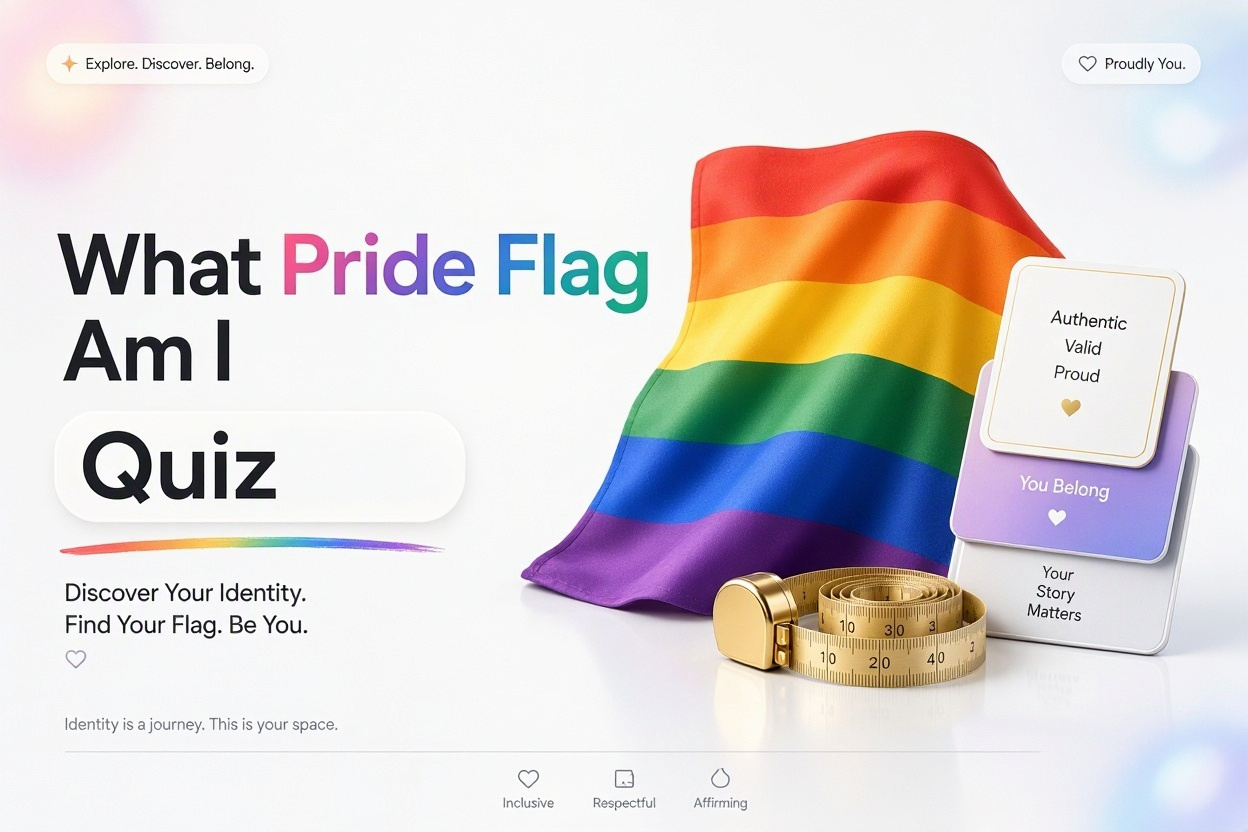
Taking a what pride flag am i quiz has become a popular first step for people who want to put language and color to how they feel inside. You answer a series of personal questions about attraction, gender, relationships, and community, and the result matches you with one of the many LGBTQ pride flags. It is quick, personal, and often surprisingly emotional to see your result appear on screen.
In this article, you will learn how these quizzes work, what the most common results mean, how to get a more accurate outcome, and what to do after you get your flag. I will also cover the limits of online quizzes, respectful ways to use pride symbols, and other reliable ways to explore identity. By the end, you will know how to use a quiz as a helpful starting point without treating it as a final label.
What a Pride Flag Quiz Actually Does
A pride flag quiz is not a medical or psychological test. It is a self-reflection tool built around common patterns in attraction, gender identity, romantic connection, and community belonging. Most quizzes ask 10 to 20 multiple choice questions and use your answers to point toward a flag like rainbow, bisexual, lesbian, transgender, nonbinary, asexual, or pansexual.
These quizzes work best when you treat them as prompts for thought rather than a diagnosis. The value is less about the final image and more about noticing which questions felt easy, which felt uncomfortable, and which answers made you pause. Those reactions often tell you more than the result itself.
How Quiz Questions Are Designed
Good quizzes focus on lived experience instead of stereotypes. They ask about who you are drawn to emotionally and physically, how you describe your own gender day to day, what kind of relationships feel right, and how you want to be seen by others. Poor quizzes rely on favorite colors, music taste, or fashion choices.
The better the questions, the more useful the result. Look for quizzes that allow uncertain answers like not sure yet or none of these fit. That option matters because identity is not always clear-cut, and being able to express doubt leads to a more honest match.
How Results Are Matched to Flags
Most quiz makers use a simple scoring system. Each answer adds points toward one or more identities, and the identity with the highest score determines your flag. For example, answers about attraction to multiple genders may point toward bisexual or pansexual, while answers about little to no sexual attraction point toward asexual.
Some newer quizzes show your top three matches with percentages instead of one winner. This approach is more realistic because many people relate to more than one community. If you get 78 percent lesbian and 71 percent queer, both deserve attention rather than ignoring the second score.
Common Pride Flags You Might Get as a Result
There are now more than 50 recognized pride flags, but most quizzes focus on 10 to 15 well known identities. The classic six-color rainbow flag represents gay, lesbian, and general LGBTQ pride. Other common results include transgender, bisexual, pansexual, asexual, aromantic, nonbinary, lesbian, gay, queer, intersex, and genderfluid flags.
Each flag uses specific colors with meaning. The transgender flag uses light blue, pink, and white to represent transition, femininity, masculinity, and gender neutrality. The bisexual flag uses pink, purple, and blue to show attraction to same and different genders. Knowing the color stories helps your result feel more personal.
- Rainbow Pride: General LGBTQ community, diversity, and inclusion. Often given when answers show broad connection to queer culture.
- Lesbian: Women and nonbinary people attracted to women. Newer versions use shades of orange, pink, and white.
- Gay Men: Attraction between men, often represented by blue, green, and white stripes in the modern version.
- Bisexual: Attraction to more than one gender, represented by pink, purple, and blue.
- Pansexual: Attraction regardless of gender, represented by pink, yellow, and cyan.
- Transgender: People whose gender differs from sex assigned at birth, represented by light blue, pink, and white.
- Nonbinary: Genders outside strictly man or woman, represented by yellow, white, purple, and black.
- Asexual: Little or no sexual attraction, represented by black, gray, white, and purple.
- Aromantic: Little or no romantic attraction, represented by green, yellow, orange, black, and white.
- Genderfluid: Gender that shifts over time, represented by pink, white, purple, black, and blue.
Lesser Known Flags That Appear in Detailed Quizzes
Longer quizzes sometimes include demisexual, demiromantic, queer, questioning, intersex, two-spirit, abrosexual, or polysexual results. Demisexual describes attraction only after a strong emotional bond. Abrosexual describes attraction or identity that shifts over time. These results are helpful if broader labels never felt quite right.
If you receive a lesser known result, take time to read first-person stories from that community. Flags are shorthand, but lived experiences give them depth. A short search for personal essays or community forums will show whether the label fits your daily life, not just your quiz answers.
How to Take a Pride Flag Quiz for Accurate Results
Your mindset going in shapes your score more than you might expect. Answer for who you are now, not who you think you should be or who you were three years ago. Do not pick answers to get a specific flag. The most useful outcome comes from honest, first-reaction choices made in a private, relaxed setting.
Take the same quiz twice if you want more clarity. Do it once quickly without overthinking, then again a few days later after you have sat with the questions. If you get the same top two results both times, that consistency is worth paying attention to, even if you are still unsure.
Prepare for Honest Reflection
Set aside 10 quiet minutes without friends watching over your shoulder. Identity questions can bring up nerves, excitement, or confusion, and outside pressure can push you toward safe answers. Turn off distractions and remind yourself there is no passing or failing score.
Read each option fully before clicking. Many people skim and choose the closest fit, but the difference between sometimes and often or romantic and platonic can change your result. If a question does not apply to you, look for a skip or neutral choice instead of forcing an answer.
Choose a Well Made Quiz Platform
Not all quizzes are equal. The best ones are made by LGBTQ organizations, educators, or community writers who explain their methods. They use respectful language, include nonbinary and asexual options, and avoid jokes that mock identities. They also link to resources for learning more after your result.
Avoid quizzes that ask only about stereotypes, require your email to see results, or promise to tell your exact sexuality in 60 seconds. Those are built for clicks, not care. For deeper reading after your result, see [Internal Link: Different LGBTQ Pride Flags Meaning] which breaks down colors and histories in plain language.
1. Find a quiet moment where you can answer privately and without rushing.
2. Read the quiz introduction to see who made it and how many questions it includes.
3. Answer based on present feelings, not past expectations or family pressure.
4. Use not sure, sometimes, or prefer not to say options when they fit better than a firm yes or no.
5. Save or screenshot your top two to three results, not just the winner.
6. Write down one sentence about what felt true and one sentence about what felt off.
What Your Quiz Result Really Means
Your result is a suggestion, not a contract. If you get the pansexual flag, it does not mean you must now identify as pansexual forever. It means your current answers align most closely with common pansexual experiences. You are free to adopt the label, sit with it privately, combine it with another term, or set it aside.
Many people feel relief when a result names something they could not articulate. Others feel disappointed or defensive, and that reaction is also useful information. If you hoped for a different flag, ask yourself why. That quiet wish often points to the identity you were already leaning toward before you clicked start.
Signs Your Result Fits Well
A good fit usually brings a sense of calm recognition. You read the description and think, that sounds like me on a normal Tuesday, not just on a special occasion. You start noticing past moments that make more sense through this lens, like crushes you dismissed or discomfort with old labels.
You do not need to meet every stereotype to claim a flag. A bisexual person can have dated mostly one gender. An asexual person can still enjoy romance. A nonbinary person can still like traditionally masculine or feminine clothes. Identity is about internal pattern, not checking every box.
Signs You Should Keep Exploring
If the description feels forced or you have to talk yourself into it, keep looking. Common warning signs include needing to ignore half the definition to make it fit, feeling anxious every time you say the label out loud after a week, or only liking the flag colors but not the meaning behind them.
It is also normal to fit between labels. Someone might feel close to both bisexual and pansexual, or both aromantic and asexual. In those cases, using umbrella terms like queer or questioning is completely valid. Identity can be specific when that helps and broad when that feels safer.
Limitations of Online Identity Quizzes
Online quizzes cannot capture culture, trauma, religion, disability, age, or safety concerns that shape how you express identity. A teen living in an unsupportive home may answer differently than the same person living independently in college. A quiz also cannot tell the difference between lack of attraction and lack of opportunity or low libido due to stress.
Language itself is another limit. Terms like lesbian, queer, and same-gender loving overlap but carry different histories in different communities. Most quizzes use U.S.-centered definitions and miss regional nuance. Treat your score as one data point shaped by the quiz writer’s perspective, not universal truth.
Quick Tips for Using Quiz Results in a Healthy Way
Use your result to start learning, not to end the conversation. Read about the flag, follow creators from that community for a few weeks, and notice if their stories feel familiar. Keep a short journal for a month about attraction, comfort, and belonging without pressuring yourself to decide.
- Save your result but do not announce it publicly until you feel steady.
- Read at least three personal stories from people who use that label.
- Notice if you feel relief, pressure, or nothing at all, all are valid clues.
- Retake a different quiz in two to four weeks and compare top matches.
- Talk to a trusted friend, counselor, or LGBTQ support line if you feel overwhelmed.
- Remember you can use no label, multiple labels, or change labels over time.
Common Mistakes to Avoid After a Quiz
One common mistake is treating a single quiz as proof and arguing with people who question it. You do not need a quiz score to justify your feelings. Another mistake is immediately buying flags, changing bios, and coming out before you have had time to sit with the idea privately.
A third mistake is taking five more quizzes in one night hoping for a different answer. That usually increases anxiety instead of clarity. Give yourself space between attempts. Identity work is slower than internet speed, and a pause often brings more insight than another set of questions.
Other Ways to Explore Your Identity Beyond Quizzes
Quizzes open the door, but real life gives you better information. Reading memoirs, watching interviews, and listening to LGBTQ podcasts lets you hear how people describe attraction and gender in their own words. Pay attention to which stories make you feel seen versus which feel distant or performative.
Journaling helps more than most people expect. For two weeks, note moments of comfort, envy, attraction, or disconnection without labeling them. Patterns emerge quickly. You might notice consistent attraction to certain genders, consistent discomfort with your assigned gender role, or consistent preference for deep friendship over romance.
Talking With Trusted People and Resources
If it feels safe, talk to one open-minded friend, sibling, school counselor, or affirming therapist. Saying thoughts out loud often clarifies them. You can frame it as questioning rather than declaring, for example, I got this result and parts of it felt true, can I talk it through.
Community resources add depth that quizzes cannot. Local LGBTQ centers often host questioning support groups for teens and adults. National hotlines and text lines offer anonymous, nonjudgmental chats. Online forums like empty closet communities or moderated subreddits let you ask questions without using your real name. For next steps on language and history, see [Internal Link: LGBTQ Identity Terms Explained Simply] for clear, respectful definitions.
Practical Examples of Self Discovery in Daily Life
Imagine you consistently got the asexual flag but were unsure. You might notice you enjoy cuddling and deep talks but feel neutral about sex scenes in movies and never experience celebrity crushes. That lived pattern supports the quiz result more than any score alone.
Or imagine you got genderfluid but questioned it. You might notice some days you feel energized presenting masculine and other days feminine, and being called only one set of pronouns feels tight over time. Tracking those shifts for a month gives you concrete evidence to reflect on, far beyond favorite color questions.
How to Use Your Flag Respectfully and Proudly
Once a flag feels right, using it can be joyful. You can add it to a profile, wear a pin, hang a small flag in your room, or use it as a phone background. Those small signals often help you find community and let others know you are a safe person to talk to.
Use flags with care in shared spaces. Do not out someone else by tagging them with a flag they have not claimed. Do not use a flag from a closed culture-specific identity if it does not apply to you, such as Two-Spirit, which is specific to Indigenous North American communities. Respect also means learning the flag history before debating its meaning online.
Display Do List and Avoid List
Do learn the correct colors and proportions if you draw or buy the flag. Many flags have updated versions, like the Progress Pride flag which adds trans, intersex, and BIPOC representation to the rainbow. Do credit community creators when you share flag art.
Do not alter a flag to make a joke or combine sacred symbols without permission. Do not use someone’s flag to argue they must act a certain way. Flags represent belonging, not rules for behavior, clothing, dating history, or politics. Keep the focus on support and visibility.
Conclusion
Pride flag quizzes work best as mirrors, not verdicts. They reflect your current feelings back in the form of color and language, and that reflection can make a confusing inner experience easier to name. The most helpful approach is to answer honestly, save your top matches, and then test them against real stories and daily life.
Remember that no online score can replace your own judgment over time. Read, journal, listen, and talk with safe people as you decide what fits. If one label from your what pride flag am i quiz continues to feel calm and true after a few weeks, keep it and use it proudly. If not, keep exploring without shame, because clarity often comes in layers.
Frequently Asked Questions
What a Pride Flag Quiz Measures in Simple Terms?
It measures self-reported patterns in attraction, romantic interest, gender identity, and expression. It compares your answers to common definitions and suggests the closest flag match. It does not read your mind or provide a medical diagnosis.
How Accurate Are Online Pride Flag Quizzes?
Accuracy depends on question quality and your honesty. Well-designed quizzes with nuanced options give a useful starting point, often within the right umbrella. Stereotype-based quizzes with few questions are mostly for entertainment and should not guide major decisions.
What to Do If You Disagree With Your Quiz Result?
Trust your reaction and keep exploring. Note which part felt wrong and research adjacent labels that might fit better. Retake a different quiz later, read community stories, and consider that you may relate to multiple flags at once.
Can a Quiz Tell Your Sexuality or Gender for Certain?
No quiz can define you with certainty. Only you can choose your labels based on lived experience over time. Use the result as a suggestion to investigate, then decide privately what language feels safe and true.
How Often Should You Retake a Pride Flag Quiz?
Retake only after real reflection, usually every few weeks or months, not multiple times in one day. Identity can shift, especially during teen years or major life changes. Comparing results over time shows meaningful patterns better than rapid retesting.