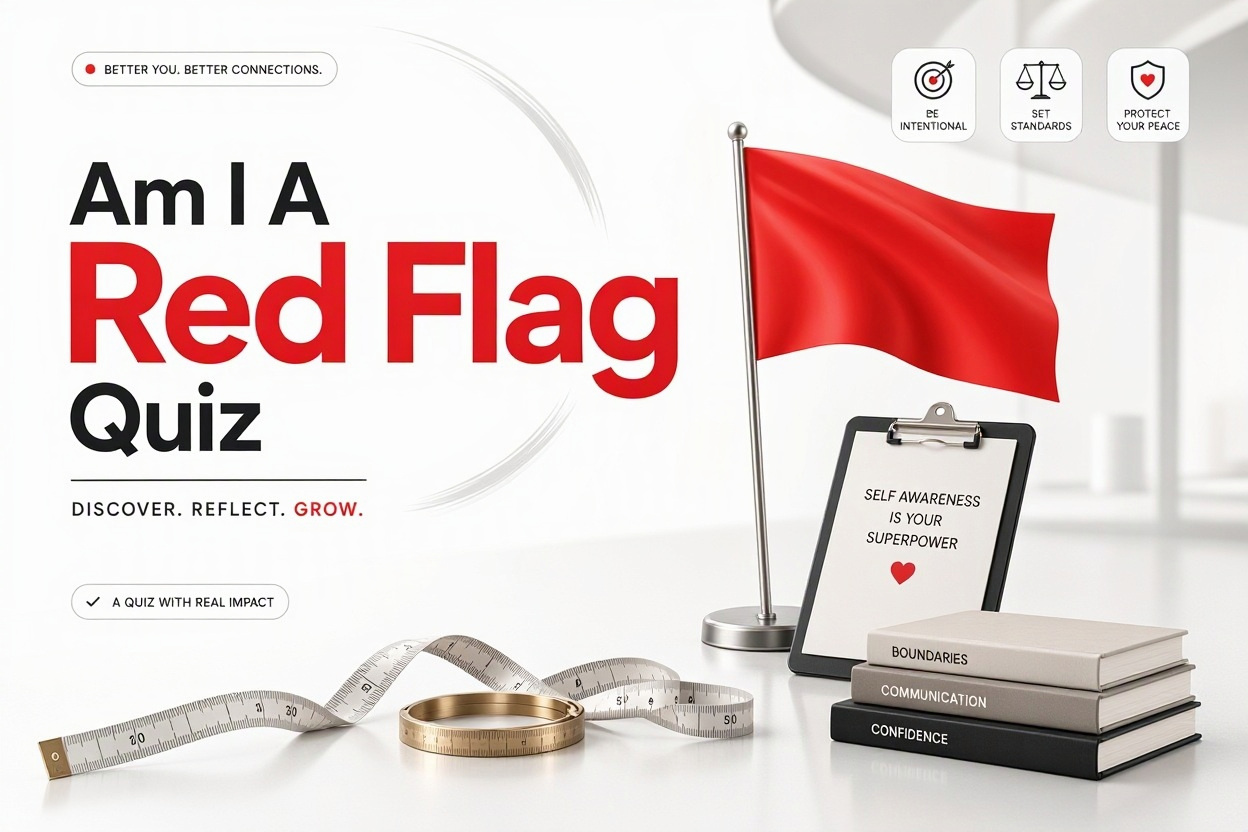
Taking an am i a red flag quiz can feel a little nerve-wracking, but it is also one of the most honest things you can do for your dating life. Most people search for it after a breakup, a fight, or a moment where they wonder if they were the problem. This article walks you through what these quizzes actually test, how to get a truthful result, and what to do with your score.
You will learn how the questions are designed, which behaviors count as real red flags versus normal flaws, and how to tell the difference between a bad habit and a harmful pattern. You will also get practical steps to improve communication, build trust, and show up better in your next relationship without beating yourself up.
What an Am I a Red Flag Quiz Actually Measures
Most versions of this quiz are built around common relationship behaviors, not personality labels. They ask about jealousy, communication, boundaries, accountability, and conflict style. Your answers create a snapshot of how you tend to act when you feel stressed, insecure, or disappointed in a relationship.
These quizzes do not diagnose you or decide your worth as a partner. They highlight patterns you may not notice in yourself. A good quiz focuses on actions you can change, like stonewalling or love bombing, rather than fixed traits like introversion or sensitivity.
How the Questions Are Designed
Quiz creators usually pull questions from relationship research and couples counseling themes. You will see scenarios about texting habits, handling disagreement, apologizing, respecting privacy, and managing expectations. The goal is to measure consistency, not one bad day.
Some questions are reverse-scored to catch socially desirable answers. For example, a statement like I always stay calm during arguments tests self-awareness. Most people lose their cool sometimes, so answering always can signal a lack of reflection.
What the Quiz Cannot Tell You
No online quiz can capture your full history, trauma, cultural background, or current stress level. It cannot tell if you are abusive or if you are simply burned out and reacting poorly. Context matters a lot in relationships.
Think of the result as a starting point for reflection. If you score high on control or avoidance, use that as a prompt to look closer. [Internal Link: Signs of a Healthy Relationship] can help you compare your habits to balanced behaviors.
Why So Many People Search for Relationship Self Checks
People usually take this kind of quiz after receiving feedback they did not expect. An ex might have called them toxic, controlling, or emotionally unavailable. Friends might have hinted that they move too fast or shut down during conflict. The quiz feels safer than asking someone directly.
Others take it before getting serious with someone new. They want to avoid repeating old mistakes. Self-checking before dating again shows maturity. It means you would rather fix a blind spot now than carry it into another relationship.
Self Awareness Has Become Part of Modern Dating
Dating language has changed a lot in recent years. Terms like red flag, green flag, gaslighting, and boundaries are part of everyday conversation. Many singles actively work on attachment style, communication skills, and emotional intelligence before committing.
Taking a self-test fits that mindset. It gives you language for what you do well and what needs work. Instead of guessing, you get a structured list of behaviors to review and discuss with a partner or therapist.
Common Reasons for Taking the Test
- You just ended a relationship and want honest insight into your part
- Your partner said you are jealous, distant, or hard to talk to
- You keep having the same fight in different relationships
- You want to date more intentionally and break old patterns
- A friend sent you the quiz as a joke and the result surprised you
- You are working on confidence and want to build healthier habits
Most Common Red Flag Behaviors Covered in These Quizzes
Quizzes tend to focus on repeat behaviors that damage trust over time. The most common categories are poor communication, jealousy and control, lack of accountability, inconsistency, and disrespect for boundaries. You will often be asked how frequently you do each one.
Minor annoyances like being late or forgetting to text back are rarely scored as major red flags. The emphasis is on behaviors that make a partner feel unsafe, unheard, or controlled. Frequency and intent matter more than a single mistake.
Jealousy, Control, and Possessiveness
Questions in this group ask about checking a partner’s phone, needing constant updates, getting upset about friendships, or dictating what they wear. Occasional insecurity is normal. Trying to limit someone’s independence is not.
Control can also sound subtle. It might look like guilt-tripping someone for spending time with family or insisting on quick replies to prove they care. Healthy love allows space. If closeness only feels good when you are in charge, that is worth addressing.
Poor Communication and Conflict Habits
This is where many people score higher than expected. Common items include shutting down, giving the silent treatment, yelling, bringing up the past, or refusing to apologize. These habits often come from stress or learned family patterns.
Passive communication counts too. Saying I am fine when you are not, expecting your partner to read your mind, or avoiding hard topics can create distance. Clear, calm, direct talk is a skill, and quizzes measure how often you use it.
How to Answer the Questions for the Most Honest Score
The value of any self-test depends on your honesty. It is tempting to answer as the partner you want to be instead of the partner you actually are. Try to think of your last two or three months in relationships, not your best moments or your worst fight.
Answer based on what you do, not what you feel inside. You might feel jealous but choose not to act on it. That distinction matters. Most well-made quizzes score behavior, so focus on actions, words, and follow-through.
Pick the Answer That Fits Real Life
Read each scenario and picture a specific memory. If a question asks about apologizing, recall the last time you were wrong. Did you say sorry clearly, make excuses, turn it around, or go quiet. Choose the closest match even if it is uncomfortable.
Avoid the middle option every time unless it is truly accurate. Many people pick sometimes to stay safe. It helps to ask yourself how a close friend or ex would answer for you. That outside perspective often brings more truth.
Steps for Getting a Reliable Result
1. Take the quiz when you are calm, not right after an argument or breakup text.
2. Think of one specific relationship or dating period to keep answers consistent.
3. Answer quickly without overthinking, then review any items you skipped.
4. Be honest about frequency. Rarely means once or twice, often means weekly.
5. Retake it in two weeks after journaling and compare patterns, not just the total score.
6. Write down the three questions that made you most uncomfortable and reflect on why.
Making Sense of Your Quiz Results Without Panicking
A high score does not mean you are undateable. It usually means you have a few strong patterns that push people away. Look at categories instead of obsessing over the total number. Two high categories give you a clear place to start.
A low score does not mean you are perfect either. It may mean you are self-aware, in a healthy season, or avoiding hard truths. Read the explanations for each section. Pay attention to any line that made you defensive, since defensiveness often points to something real.
Low, Medium, and High Scores Explained
Low scores often reflect steady communication, respect for boundaries, and willingness to repair after conflict. You likely listen well and take responsibility. Keep practicing those habits, especially under stress when old patterns return.
Medium scores are the most common. They suggest a mix of strengths and growth areas. You might be supportive but struggle with jealousy, or kind but avoidant during fights. Focus on one habit at a time instead of trying to fix everything at once.
When a High Score Feels Shocking
A high score can sting, especially if you see yourself as caring. Remember that caring intentions do not cancel out hurtful impact. If you often check up on a partner, shut down, or escalate fights, your partner feels that impact daily.
Use the shock as motivation, not shame. Shame makes people hide. Responsibility helps people change. Talk to a trusted friend, journal about specific examples, and pick one behavior to work on for the next month. Small, consistent change rebuilds trust faster than grand promises.
Green Flags That Show Healthy Relationship Habits
Red flags get a lot of attention, but green flags matter just as much. These are steady behaviors that make a partner feel respected and secure. Most quizzes include them as reverse items, and they can balance out occasional slip-ups.
Think about listening without interrupting, keeping promises, respecting no, handling disappointment calmly, and celebrating your partner’s success. If you do these consistently, you already have a strong foundation to build on.
Emotional Safety and Respect
Emotional safety means your partner can disagree with you without fear of mocking, punishment, or withdrawal. You ask curious questions instead of assuming the worst. You respect privacy, friendships, work goals, and alone time.
Respect also shows in small moments. You put the phone down during important talks. You remember details that matter to them. You follow through on plans or communicate early when you cannot. These habits signal reliability.
Accountability and Repair After Conflict
Every couple argues. Healthy partners repair well. They name what they did, acknowledge the impact, and change the behavior. They do not rely on gifts or jokes to skip the hard conversation.
Good repair sounds like You are right, I interrupted you and that was dismissive. I will pause and let you finish next time. It is specific and focused on action. Over time, consistent repair builds more trust than never fighting at all.
Comparison of Common Red Flags and Healthy Alternatives
Red Flag Pattern: Checking phone without permission. Healthy Alternative: Asking about concerns directly and respecting privacy.
Red Flag Pattern: Silent treatment for days. Healthy Alternative: Taking a short timeout and agreeing when to talk again.
Red Flag Pattern: Love bombing then withdrawing. Healthy Alternative: Showing steady, consistent affection that matches words.
Red Flag Pattern: Blaming partner for all problems. Healthy Alternative: Owning your part and asking how to fix it together.
Red Flag Pattern: Jealousy over friendships. Healthy Alternative: Expressing insecurity calmly without controlling who they see.
Red Flag Pattern: Breaking boundaries after no. Healthy Alternative: Accepting no the first time and adjusting plans.
Simple Habits to Reduce Red Flag Behavior
Change works best when it is specific and repeatable. Instead of promising to be less toxic, pick one clear habit. Examples include pausing before replying when angry, asking before giving advice, or putting agreements in writing so you remember them.
Track progress weekly. Note what triggered the old behavior, what you did instead, and how your partner responded. Over time you will see which strategies actually help you stay calm and respectful.
Improve Communication in Daily Life
Start with short daily check-ins. Ask what went well today, what felt hard, and what you need tomorrow. Keep it to ten minutes. This prevents small frustrations from building into big blowups.
Practice reflective listening. Repeat back what you heard before responding. It sounds simple, but it slows down arguments and reduces misunderstandings. Your partner will feel heard even when you disagree.
Build Trust Through Consistency
Trust grows from kept promises, not big gestures. If you say you will call at eight, call at eight. If you cannot, text early with a new plan. Consistency tells your partner they can rely on you when it counts.
Apologize correctly when you slip. Name the action, show you get the impact, and state what you will do differently. Then follow through. One repaired mistake can strengthen a relationship more than a week of perfect behavior. [Internal Link: How to Communicate Better in Relationships] offers scripts you can practice.
Limits of Online Quizzes and When to Get Real Feedback
Online quizzes are useful for self-reflection, but they have clear limits. They rely on self-reporting, which is biased. They use short questions without context. Two people can pick the same answer for very different reasons.
Cultural norms, neurodivergence, trauma history, and mental health all affect communication style. A quiz cannot tell the difference between intentional manipulation and a stress response you want to change. Human feedback adds that missing context.
Why Self Reporting Can Be Misleading
We tend to remember our intentions more than our actions. You might remember trying to be helpful while your partner remembers feeling criticized. Mood also skews results. After a bad day, you may rate yourself more harshly than usual.
Social media can distort expectations too. Some normal behaviors get labeled as red flags online. Needing alone time, setting boundaries, or not texting all day are not automatically toxic. Real life requires nuance that a score cannot provide.
Do and Do Not List for Using Your Results Wisely
Do treat the result as feedback about habits, not a verdict on your value.
Do pick one or two patterns to work on with clear actions.
Do ask a trusted friend or therapist for honest examples.
Do tell your partner what you are working on and how they can support you.
Do track change over four to six weeks before retaking the quiz.
Do Not send your score to an ex to prove you have changed overnight.
Do Not use a low score to dismiss your partner’s concerns.
Do Not label yourself toxic and give up on growth.
Do Not diagnose yourself or others with disorders based on a quiz.
Do Not take five different quizzes in one night and spiral over the worst score.
Conclusion
Most people who take this kind of test already show a green flag by being willing to look inward. Scores are most useful when you focus on specific behaviors, practice steadier communication, and ask for honest feedback from people you trust. Change does not require perfection, only consistency, repair, and respect for boundaries over time.
If your result surprised you, pick one habit to improve this month and track it closely. With patience and clear action, an am i a red flag quiz becomes less of a judgment and more of a practical starting point for healthier dating.
Frequently Asked Questions
How Accurate Is an Am I a Red Flag Quiz?
It can highlight common patterns but it is not a clinical tool. Accuracy depends on honest answers, clear questions, and context about your stress, history, and relationship dynamics.
What Score Means I Am a Red Flag?
There is no universal cutoff. Focus on high-frequency behaviors like control, disrespect, or avoidance rather than the total number. Repeated harmful patterns matter more than one bad result.
Can Men and Women Take the Same Quiz?
Yes, most quizzes work for any gender. Healthy communication, boundaries, and accountability apply equally. Look for versions that focus on behaviors rather than stereotypes about men or women.
Should I Share My Result With My Partner?
You can share what you are working on, but avoid using the score as proof. Talk about specific actions you want to change and ask what support would actually help.
How Do I Stop Being a Red Flag?
Pick one behavior, learn its trigger, and replace it with a calmer habit. Practice consistent follow-through, apologize well, and consider therapy or trusted feedback for lasting change.